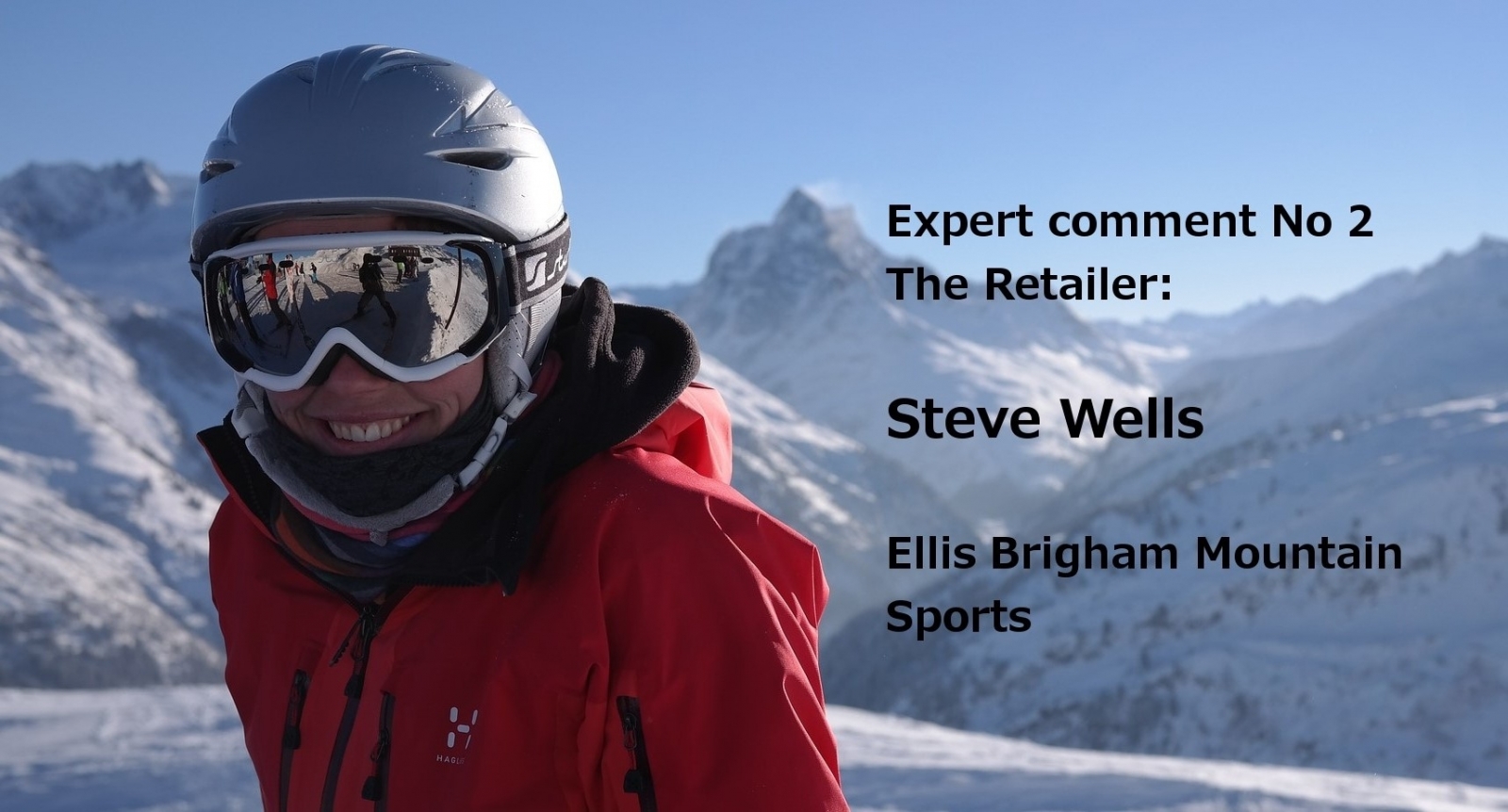
There are two main types of construction, hard shell and in-mould. Hard shell helmets have an energy absorbing foam layer, often EPS, bonded to a harder outer plastic, normally ABS. Think of them as two pieces stuck or glued together, this creates a tough product that is usually a cheaper option. In-mould helmets fuse an energy-absorbing layer of foam with the harder outer shell during the moulding process, these are made together at the same time. The result is lighter helmets, that can have more ventilation incorporated into the design, but they will tend to be more expensive.
Recently things have been evolving. A popular construction now is the hybrid, a mix of the best parts of hard shell and in-mould. Hybrid models have the toughness where needed, plus the lightness and ventilation that most skiers desire. In addition to this, various brands add interesting new materials such as Koroyd, Aramid and Carbon Fibre, or altering the shapes of the shock absorbing layers, the aim being to create stronger, more impact resistant and lighter models. There are even some helmets, called soft shells, using flexible materials, such as the Giro’s Vinyl Nitrate, that allow the helmet to bend and re-shape.
Look out for MIPS (Multi-directional Impact Protection System). This is not a construction as such but a safety feature integrated into the build. MIPS reduces rotational forces on the brain caused by angled impacts to the head. In a MIPS helmet the shell and the liner are separated by a low friction layer. When subjected to an angled impact, the low friction layer allows the helmet to slide relative to the head, absorbing much of the energy.
Lastly, it’s important to consider the size and the fit. When it comes to size ignore the word ‘medium’, ‘large’ and look at the actual figures in centimetres. It is worth trying a few different makes to see which suits your head best. Some manufacturers add levels of customisation and adjustability to particular models for even better comfort and fit. When you try a helmet on, it should fit firmly and snugly on your head. Align the front of the helmet above your eyebrows and tighten the chinstrap, make sure there are no unwanted gaps between the helmet lining and your head. In addition, check that the back of the helmet does not press the back of your neck.
For more Ellis Brigham information on ski helmets, please click HERE