Displaying items by tag: newsletter13
Charlie is our darling!
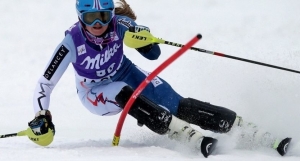
Top British skier and Olympic hopeful Charlie Guest has signed an initial two-year sponsorship agreement with MPI Brokers.
How to make your ski trip even more enjoyable
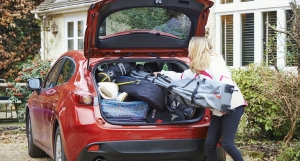
With the welcome arrival – at last – of substantial snowfalls at lower as well as higher levels, thousands of British skiers will be keen to get on their skis as often as possible in the rest of the season.
You may be one of the many for whom the only thing that spoils a ski trip is the hassle of taking baggage and equipment to and from airports.
It's off to snow we go
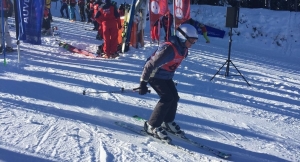
MPI Brokers heads to Morzine for the second of its six big ski event sponsorships this season – Snow-Camp's eighth annual Alpine Challenge.
The two-day charity snowsports endurance event helps raise funds for Snow-Camp's work among inner city young people. Teams of four aim to exceed 150km of skiing and reaching all 35 checkpoints across the 15 reasorts in the Portes de Soleil during the event.
Closed runs: To ski or not to ski

If you choose to ski a closed run, are you still insured? This is a question that all skiers should consider before passing a sign like the one in the picture.
It is particularly pertinent in view of last winter's tragedy of a party of French schoolchildren being caught in an avalanche while skiing on a closed run.
The answer is usually in the conditions of the skier's policy. But beware – some insurers' conditions can be confusing. For example, below is an exclusion in a ski travel insurance policy, recently drawn to our attention:
‘... off piste activity undertaken against local authoritative advice.’
Closing a run technically makes it off piste, but off piste is neither open nor closed (unless it is an itinerant run). It therefore follows that skiing a closed run would breach the example above and the skier would be skiing it with no insurance.
In MPI’s view, this example places a restriction on a skier’s activity – and unless he was to read the policy wording and understand it he would be unware of the risk he was taking. In the event of an injury on a closed run the rescue services would still attend, but they might charge more – and the skier in this case would have to pay.
Leading ski journalist Peter Hardy (The Telegraph and We Love To Ski), writing after the French tragedy, says: "Skiing outside the patrolled area is not illegal in France. Entering a closed piste is the same as going off-piste. Any notice telling you that it is closed is advisory rather than mandatory. It’s a matter for the individual."
Michael Pettifer, Managing Director of MPI Brokers, says: "If you decide to ski a closed run think carefully of the consequences. Why is it closed? Are they blasting and is there an avalanche danger? Has it been pisted? Is the lift shut at the bottom? Is there a lack of snow – or is it just the end of the day?
"In the event of an incident you may have to justify your decision to ski the run. That said, here is an extract from MPI’s policy:
‘...... your deliberate exposure to unnecessary danger, except in an attempt to save human life or whilst participating in an activity covered by this insurance’
[in this case skiing]."
MPI Brokers calls for IPT reduction on travel insurance
News that Liberal Democrat leader Tim Farron wants the government to rethink its intention to raise insurance premium tax (IPT) to 12% next year has prompted a call for a reduction of the ‘unfair’ 20% IPT levied on travel insurance.
Travel and ski insurance specialist Michael Pettifer, Managing Director of MPI Brokers, says: “We fully support Mr Farron’s early day motion that calls for reflection on the Chancellor’s announcement of an increase in the basic rate of IPT from 10% to 12% but we also urge Mr Farron and the government to take this opportunity to review the 20% IPT on travel insurance.
“The higher rate was introduced to curtail an apparent abuse dubbed ‘value shifting’ which, due to regulation, no longer exists. One of the unintended consequences is that certain groups of travellers are unfairly taxed due to age, riskier activity, poor health or length of travel – for example, gap year students and seasonaires.
“In respect of the last group, after the higher rate was introduced in the Budget in 1999, there was a significant increase in the number of referrals to the British Consulates and Embassies by students in trouble abroad, due either to having no insurance or policies of poor quality. In response, the Foreign and Commonwealth Office launched the ‘Know before you go’ campaign (recently rebranded to 'Travel aware'). This included encouraging people to get travel insurance – which meant they had to pay more high-rate tax to the government.
“There is now no logical reason why the travelling public should have to pay such an exorbitant rate of tax on travel insurance as well as all the other taxes they have to pay for travelling overseas.
“One of the dangers of over-taxing, apart from not insuring (30% don’t) is that it tempts people to look for cheaper insurance. Don’t be fooled by cheaper premiums – they always mean reduced cover. That is why we always say:
it’s not the cost that matters, but the cover that counts